Ballistic Protection for Patrol Boats
Optional ballistic panels, certified to NIJ III+, built into the patented ARMOR hull collar.
- Panels certified to NIJ III+
- Higher levels on request
- Built into the collar
- Fitted now or added later
- Sentinel 21 · Sentinel 25 · Tactical 29
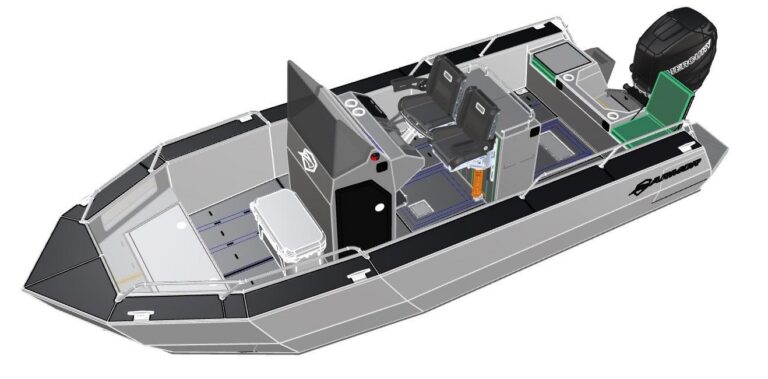
Some crews need more than a hull between them and a threat. On our patrol boats, ballistic (bulletproof) panels are built into the sides of the boat, in the patented ARMOR hull collar and the extended gunwales, so the crew has cover where they stand and work.
Ballistic protection is an option on the Sentinel Console 21, Sentinel Cabin 25 and Tactical Response 29. Our panels are certified to NIJ III+, with higher levels on request, and they've been tested against 7.62×51 mm M80, 5.56 mm M193 and .300 Win Mag rounds. Armor adds cost and weight, so we fit it to the threat you face, and it can be added later if the mission changes.
How it works
On many small boats, armor is added afterward: panels hung on rails or bolted to the console. Ours are part of the hull side.
Panels in the collar
The ARMOR hull collar is open on the inboard side and closed with panels. On a protected boat, those panels are ballistic panels, so the armor sits in the hull side, out of the way.
Extended gunwales
The sides come up high enough to give officers cover behind them, not just a rail to lean on.
Foam behind the armor
The collar's closed-cell foam keeps adding buoyancy behind the panels, so the same structure protects the boat and the crew.
The ARMOR hull collar behind the panels
Most collars are fitted to a hull: inflatable tubes that can be cut or punctured, or sealed collars whose foam can take on water and have to be replaced. The ARMOR hull collar is part of the hull. Above the bottom, the welded aluminum hull sides step out and up to the gunwale to form the collar, and we fill it with closed-cell polyethylene foam, CNC hot-wire cut to the shape.
The collar is open on the inboard side, so there's no airtight seam to fail and nothing sealed in to trap water. Panels close it from inside the boat and come off for access; on a protected boat they're ballistic panels. A lip around the deck keeps deck water out of the foam and sends it aft.
The foam takes on almost no water and doesn't swell, so the boat doesn't get heavier or lose buoyancy as it ages. Because it sits high on the hull, its reserve flotation works where it counts, and the boat is virtually unsinkable. As the boat heels, the collar's outer chine meets the water and pushes back, so it stays steadier with crew at the rail; on plane that chine runs clear of the water and adds no drag. The design is protected by US Patents 10,336,414 and 10,780,958.

- 1The hull forms the collar. Above the bottom, the welded aluminum hull sides step out and up to the gunwale.
- 2Closed-cell polyethylene foam, CNC hot-wire cut to fit and set in from inside the boat. It takes on almost no water and doesn't swell.
- 3An inboard panel closes the collar. It comes off for access, and on a protected boat it's a ballistic panel.
- 4A deck lip inboard of the panel keeps deck water out of the foam and sends it aft.
- 5A panel retaining plate on the foam side holds the foot of the panel, with the deck lip on the inboard side.
- 6Open on the inboard side: no airtight seam to fail and nothing sealed in to trap water.
- 7The outer chine runs clear of the water on plane, so it adds no drag, and meets the water as the boat heels, so it pushes back.
- 8The bottom runs out under the collar: more planing area for the beam, with the deadrise set for the water you run.
Speed, weight and cost
Every pound of armor costs speed and payload. That's why protection is a choice on our boats, not a default.
Fit the threat
Tell us what your crews face, and we'll recommend the level and the coverage: helm, sides, or the full collar.
Power for the weight
Armor is part of the weight we design the hull and power around, so the boat still performs when it's fitted.
Add it later
Because the panels close the collar, units that don't need protection on day one can add it when the mission changes.
Boats with ballistic options

Sentinel Console 21
21′ center console on a single outboard, 42 kn (48 mph). ARMOR hull collar, self-bailing deck, ballistic panels optional.
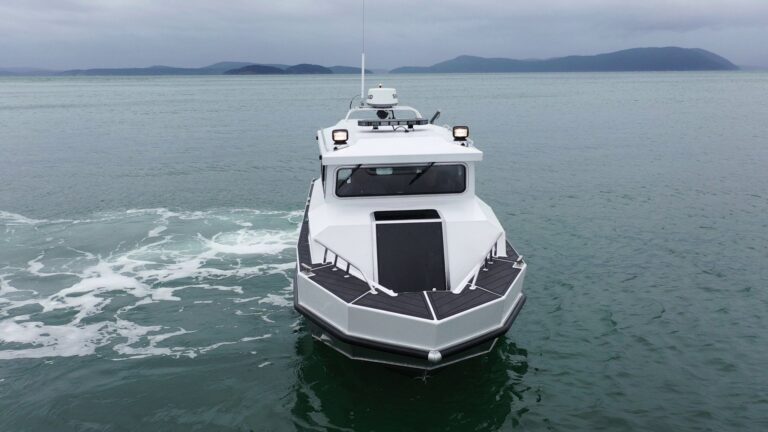
Sentinel Cabin 25
25′ to 29′ full cabin on waterjet or outboard power; diesel jet from about 27′. Ballistic panels optional.
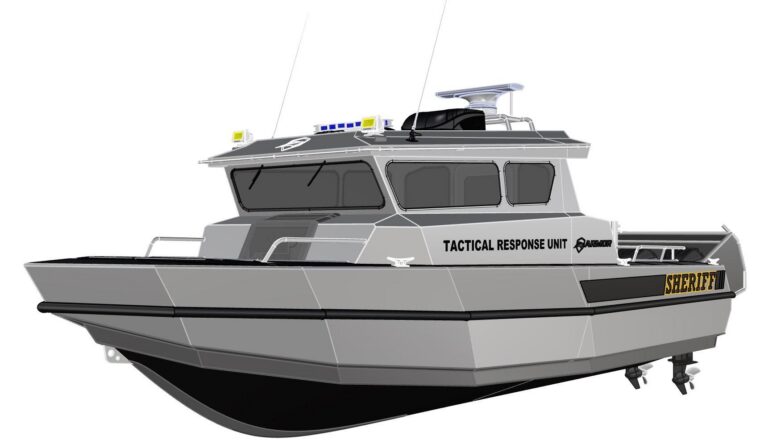
Tactical Response 29
29′ cabin boat for tactical teams: twin outboards up to 700 hp, 50+ kn (58+ mph), 1/2″ keel and transom.
Built your wayEvery size, layout and power package on this page is a starting point. Length, beam, layout, power and outfitting can all change, and we work it out with you in 3D CAD before any plate is cut.
Start your custom buildBallistic protection questions
Are your boats bulletproof?
With the optional ballistic panels, the areas they cover are: our panels are certified to NIJ III+, with higher levels on request. No boat is bulletproof everywhere, so we'll show you exactly what's covered.
What does NIJ III+ mean?
NIJ ratings come from the US National Institute of Justice's armor standards. Level III covers common rifle rounds; III+ is an industry rating for armor tested to Level III plus additional rifle threats. Our panels have been tested against 7.62×51 mm M80, 5.56 mm M193 and .300 Win Mag rounds, and the test reports are linked on this page.
What rounds have your panels been tested against?
7.62×51 mm M80, 5.56 mm M193 and .300 Win Mag. The test reports are linked above.
Which boats can have ballistic protection?
The Sentinel Console 21, Sentinel Cabin 25 and Tactical Response 29.
Can it be added later?
Yes. The panels close the collar, so protection can be added after the boat is built.
Does armor slow the boat down?
Weight always costs some speed and payload. We design the hull and power around it, and fit only the coverage the mission needs.
Is ballistic protection standard?
No. It adds cost and weight, so it's an option we fit when the mission calls for it.
Talk to us about protection
We design every boat in-house, so we can build to your exact requirements and help you solve the technical problems a catalog boat can't.
Prefer to talk it through?