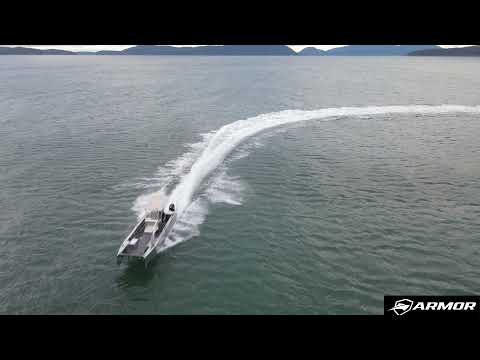
ARMOR aluminum catamaran landing craft running with a wake
Catamaran Landing Craft
Landing Craft · Platform

Catamaran Landing Craft: Stable, Beach-Friendly, Built to Order

Our landing craft construction on two hulls: more stable, and it beaches better.

  • 20′–50′+
  • Twin outboards
  • Bow door sized to the beam
  • 13″ static draft (28′-6″)
  • Self-bailing decks

Our catamaran landing craft is built the same way as our monohull landing craft: CNC-cut 5086 plate, a 1/2″ keel, 3/16″ welded self-bailing decks and a double-seal bow door. The difference is two hulls.

The trade-off is honest. A catamaran carries less weight than a monohull of the same length and is more sensitive to how it's loaded. In return it's more stable, and it beaches better: both hulls touch the beach together as it comes up. It runs on twin outboards.

Built your wayEvery size, layout and power package on this page is a starting point. Length, beam, layout, power and outfitting can all change, and we work it out with you in 3D CAD before any plate is cut.

Start your custom build
Built in Anacortes, WA, USAIn-house design & engineeringBuild capacity to 100′CNC router cutCNC formingPulse MIG & TIG weldingVertical integration: we do it allDiesel & waterjet experts

In our shop now

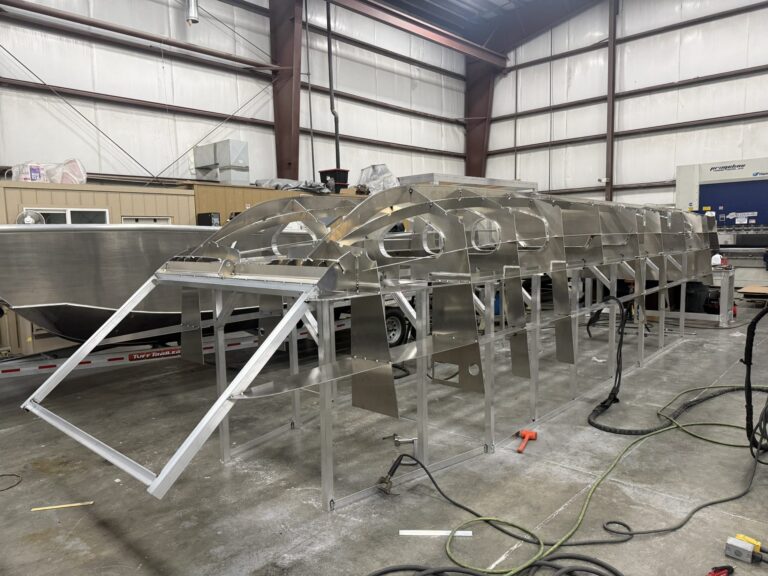
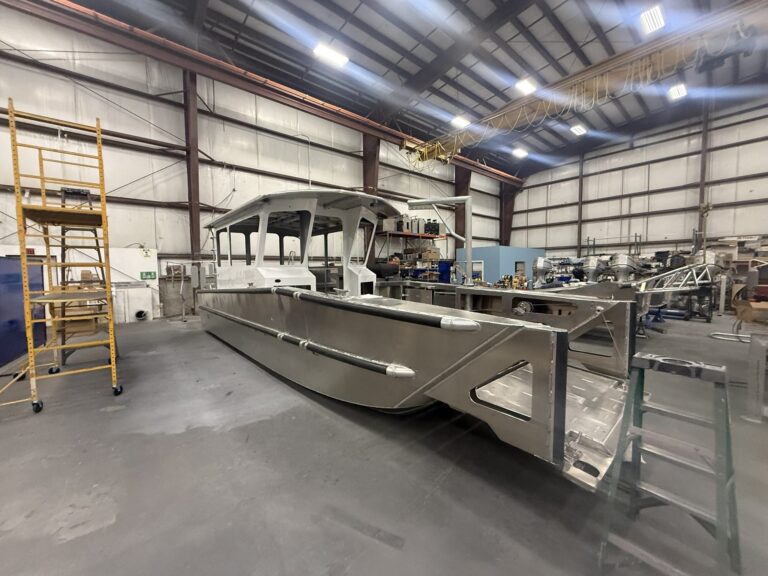
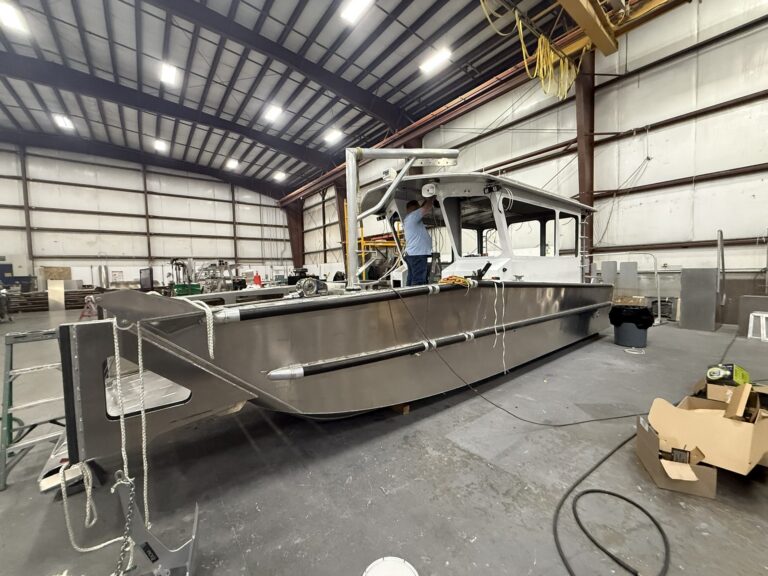
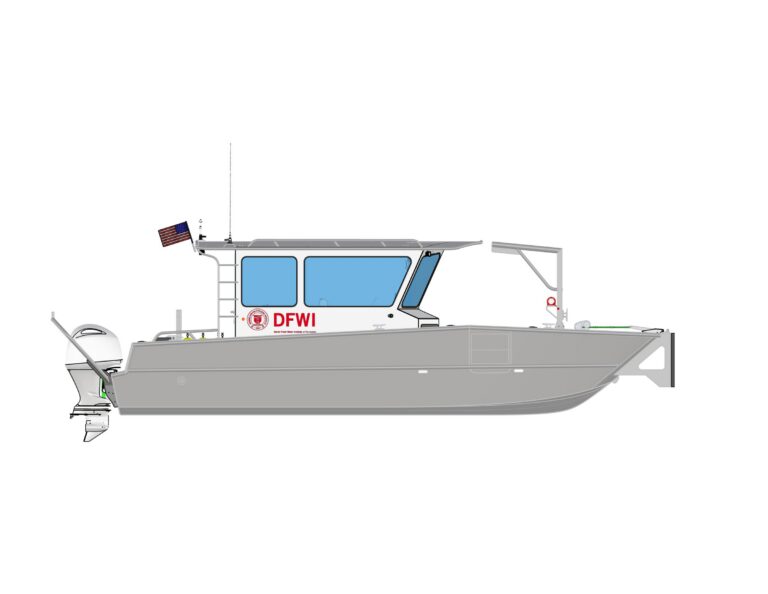
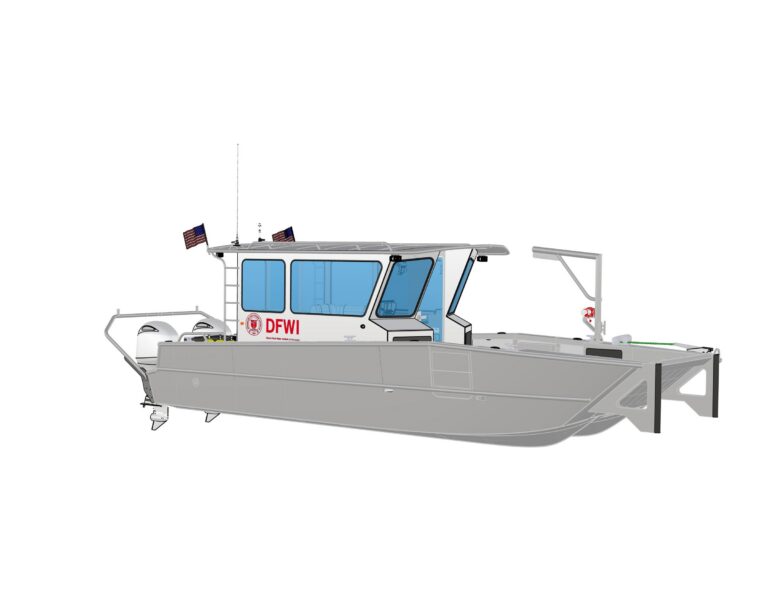
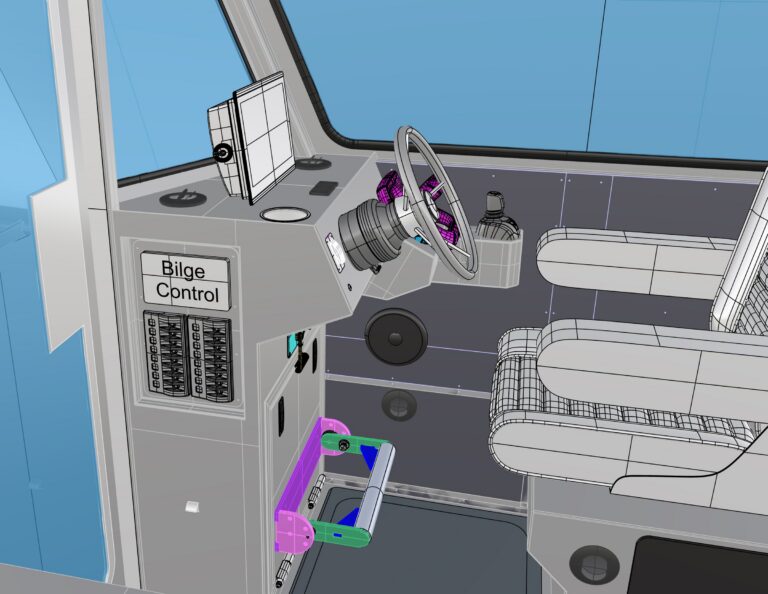
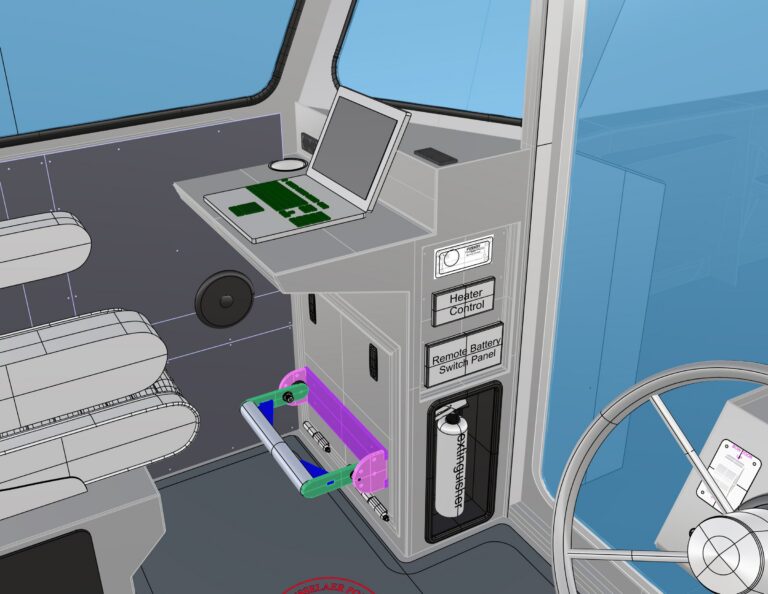
A full-cabin dive and research catamaran is in our shop now. We framed the hull upside down on the jig, then set the cabin on and started the wiring. We laid out the whole boat in 3D CAD before we cut metal; the renders show where it's headed.

ARMOR catamaran landing craft hull framed upside down on the jig
The hull, framed upside down on the jig
ARMOR catamaran landing craft in build with the cabin on
The cabin on
ARMOR crew wiring the catamaran landing craft cabin
Wiring the cabin
ARMOR catamaran landing craft with full cabin, 3D CAD rendering, profile
Profile (rendering)
ARMOR catamaran landing craft with full cabin, 3D CAD rendering, bow quarter
Bow quarter (rendering)
ARMOR catamaran landing craft helm, 3D CAD rendering
Helm (rendering)
ARMOR catamaran landing craft nav station, 3D CAD rendering
Nav station (rendering)
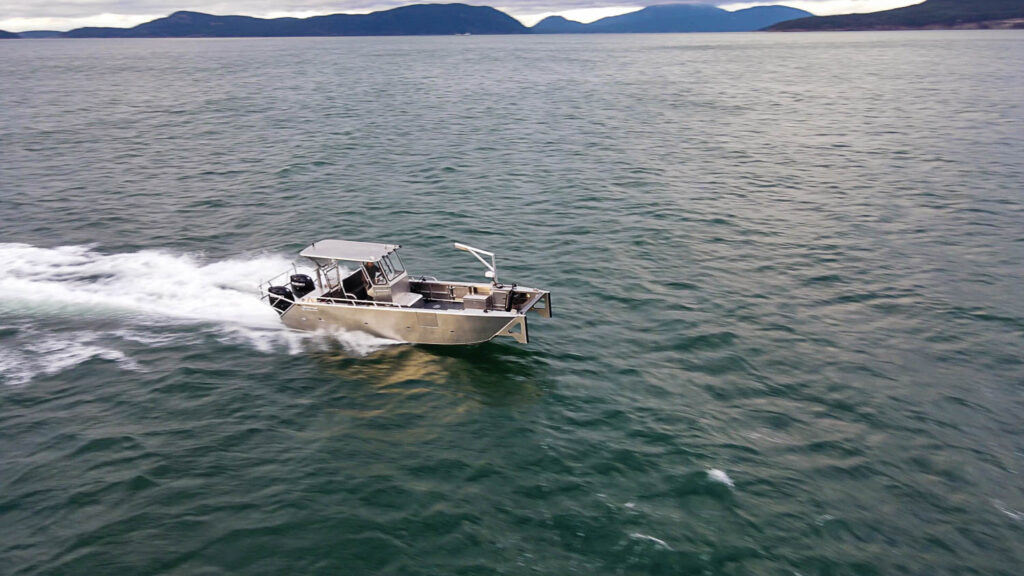
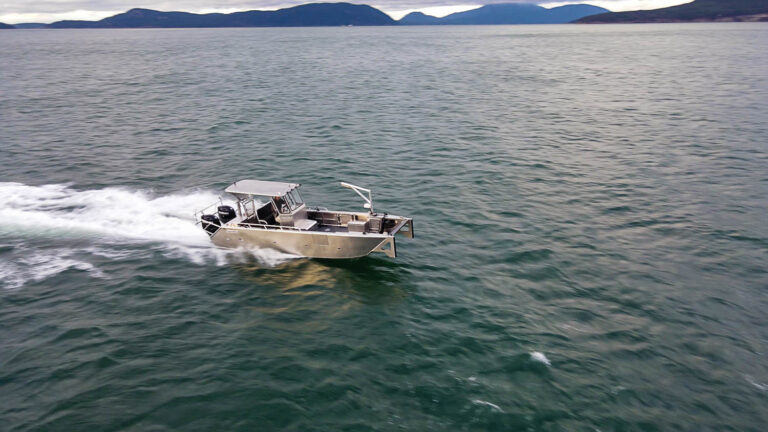
ARMOR aluminum catamaran landing craft running with a wake
Catamaran landing craft running

Specifications

Length20′–50′+ (28′-6″ shown)
Beam8′-6″ (28′-6″ model)
Static draft13″ (28′-6″ model)
Fuel80 gal (28′-6″ model)
Top speed37 kn (43 mph) (28′-6″ model)
PowerTwin outboards, 150+ hp each
Bow doorSized to the beam; 67″ on the 28′-6″, double seal
Bottom / sides1/4″ 5086 / 3/16″ 5086
Keel1/2″ + 1/4″ beaching plate
Transom1/2″
Decks3/16″ 5052, welded, self-bailing

Who it's for

Dive and research teams · Universities, fisheries and utilities · Dam and reservoir crews · Spill response · Shore crews landing ATVs, gear and people

Two hulls, same standard

Same buyers, same build quality as the monohull: the catamaran is the choice when stability at rest and gentle beaching matter more than maximum payload.

We built one for the U.S. Army Corps of Engineers for dam and reservoir maintenance: clearing spillways, managing and repairing the booms and buoys, and hauling equipment out to the dam. It's a utilitarian, very stable work platform.
Build it your way

Choose the pieces. We engineer the boat around them.

Length

20′ to 50′+

Power

Twin outboards

Layout

Open deck, center console, aft console with T-top, or full cabin

Equipment

Davits, dive-tank racks, dive doors, fire pump

Popular options: Full cabin with heat · Aft console T-top · Bow davit and windlass · Dive-tank racks · Fire pump (can be mounted out of sight)

How much it carries

A landing craft's payload is set by its displacement: how much water the hulls can push aside at a safe loaded waterline, less the boat's own weight, fuel and crew. A catamaran carries less than a monohull of the same length, and it's more sensitive to where the load sits.

Our 28′-6″ catamaran carries about 2,000–4,000 lb. That's an estimate for planning, not a rating: real payload depends on where the load sits, how the boat is configured and outfitted, and how much fuel, crew and gear are aboard. For heavy equipment, see our monohull landing craft. Tell us the load and how you'll carry it, and we'll run the numbers.

How the catamaran is built

  • 1/4″ 5086 bottom, 3/16″ 5086 sides
  • 1/2″ keel with 1/4″ beaching plate
  • 1/2″ transom
  • 3/16″ 5052 welded, self-bailing decks
  • Double-seal bow door with electric winch and mechanical backup
  • Spec'd to US Army Corps requirements
  • New sheer line standard on every hull

The ARMOR standard

  • Every part modeled in 3D CAD and reviewed with you before plate is cut
  • CNC-cut parts, plate-marked with forming and welding instructions, so every hull matches the drawing
  • Formed on a 12′, 200-ton CNC press brake
  • Welded to written procedures, to AWS D1.2 and AWS D3.7
  • Marine-grade 5086 and 5052 aluminum throughout

Built in our 16,000 sq ft Anacortes facility, with a full-length 5-ton bridge crane and room for vessels up to 100′. Because every part is drawn in 3D CAD and CNC-cut, we're set up for multi-boat and fleet contracts as well as one-off custom builds.
Warranty: 10-year limited hull warranty for commercial use; lifetime limited hull warranty for recreational use.

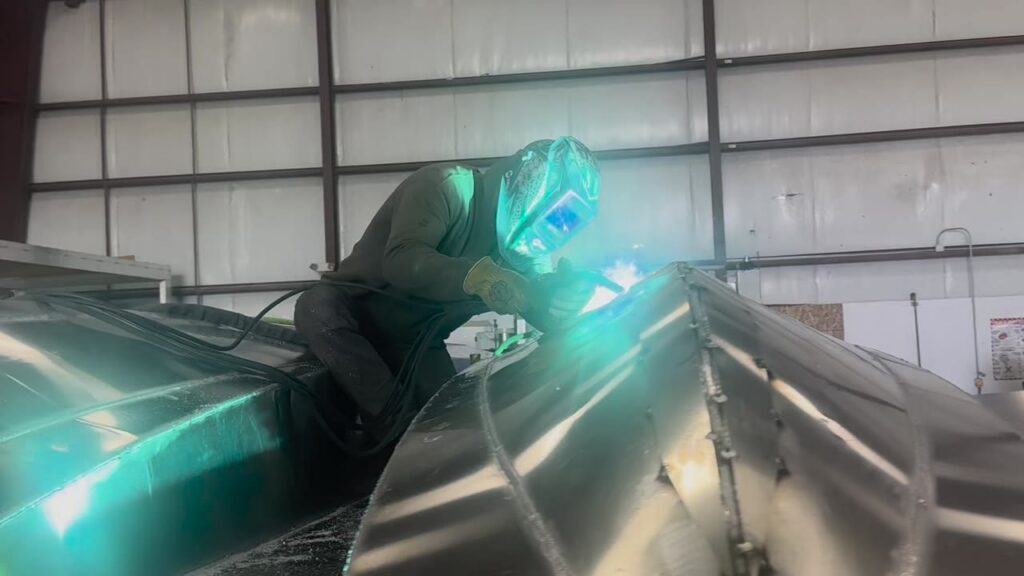
ARMOR Marine welder in a welding helmet and gloves, welding an aluminum hull in the Anacortes shop

Questions

Choose the catamaran for stability and easy beaching; choose the monohull to carry the most weight for its length and for diesel or jet power.

Twin outboards suit the catamaran's two hulls. For diesel or jet power, see our monohull landing craft.

Yes. The 28′-6″ carries ATVs, gear and crew through its 67″ bow door.

It's sized to the beam: the door grows with the boat, so a wider catamaran gets a wider door. On the 28′-6″ it's 67″. Every door has a double seal, an electric winch and a mechanical backup.

Start your Catamaran Landing Craft

We design every boat in-house, so we can build to your exact requirements and help you solve the technical problems a catalog boat can't.

This field is for validation purposes and should be left unchanged.

Prefer to talk it through?